What Does
Non-Stackable Mean?
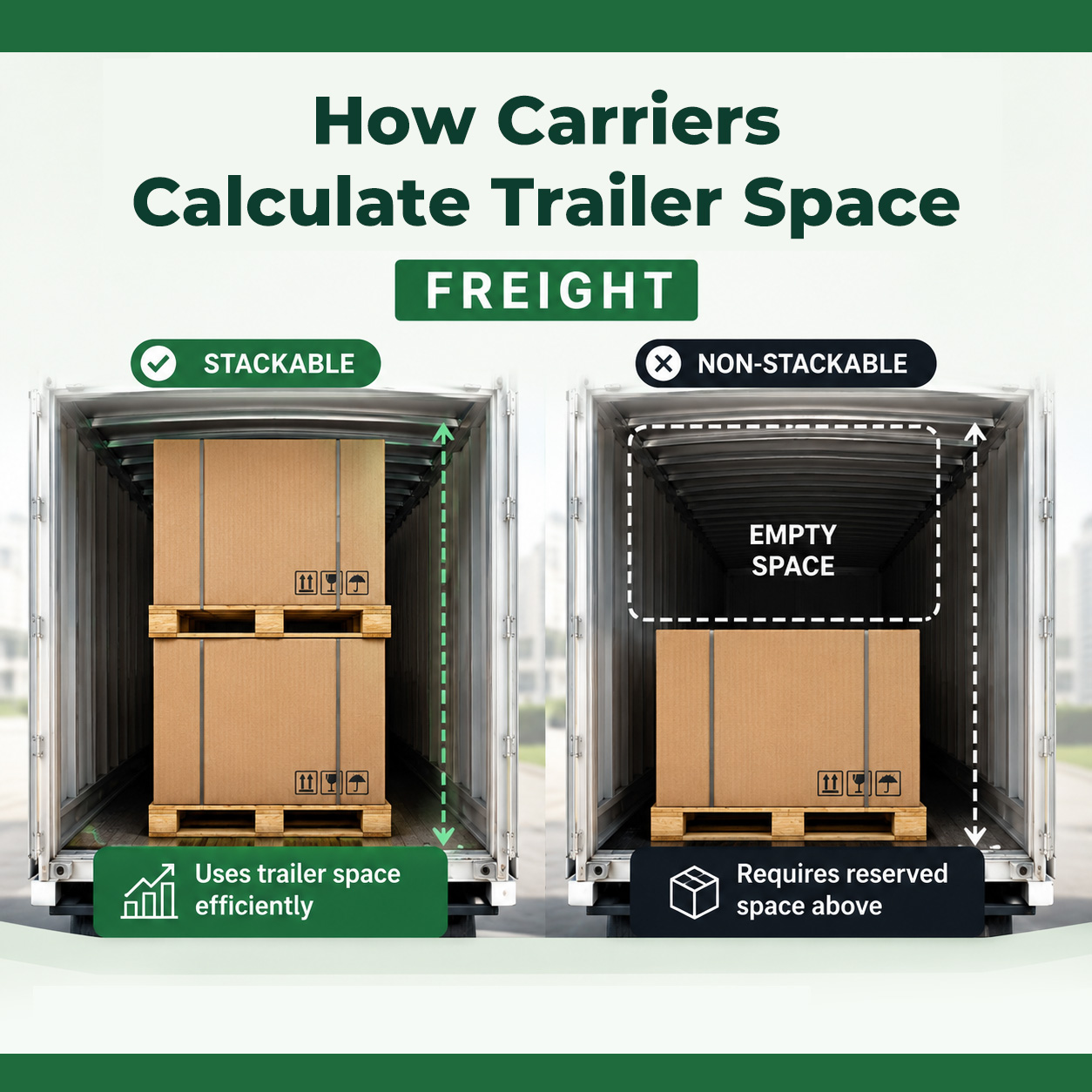
Non-stackable freight means the carrier cannot safely place another shipment on top of your freight. This can affect how trailer space is calculated and may increase shipping costs.
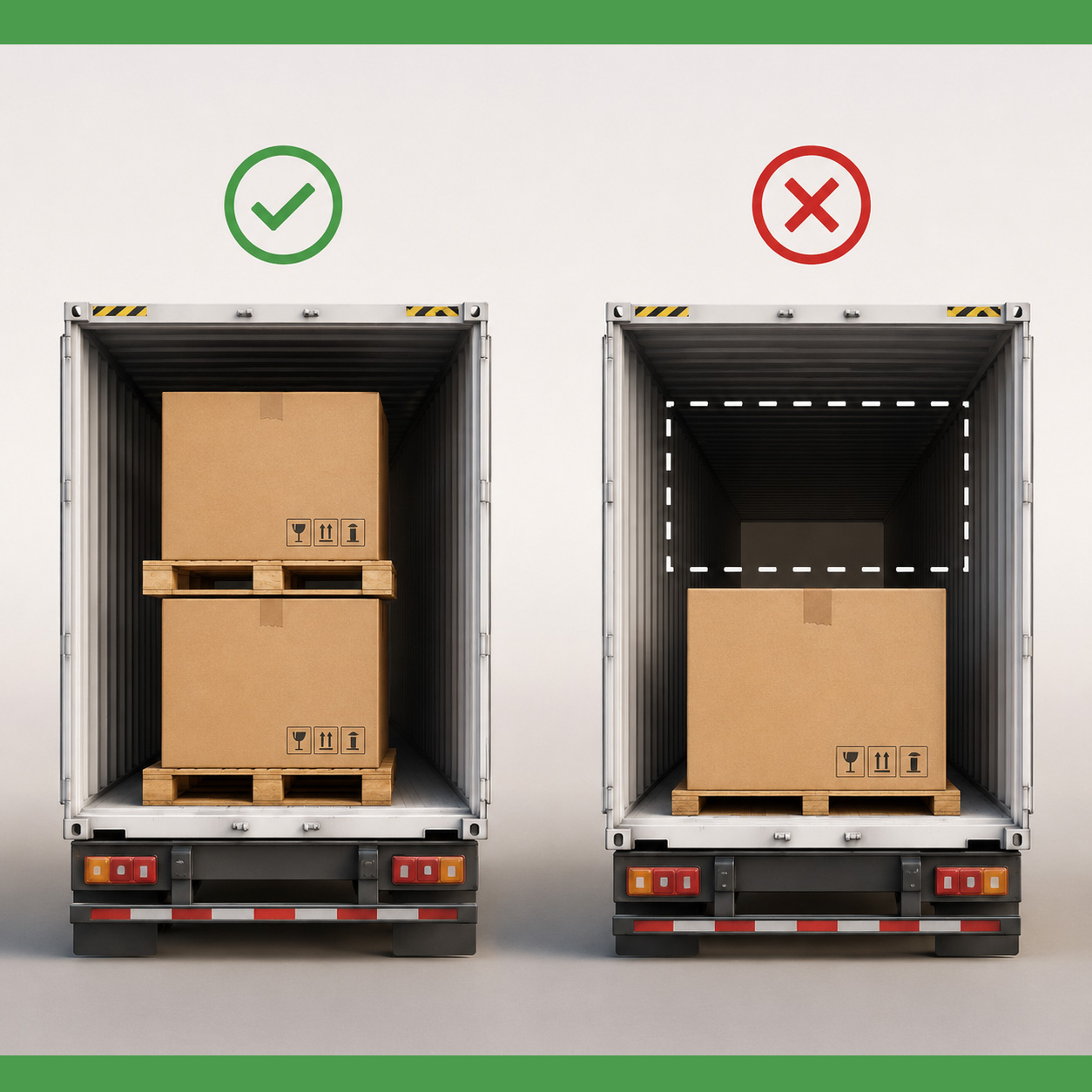
Another shipment can be placed on top.
The space above must stay empty.
What Does Non-Stackable Mean?
A shipment is considered non-stackable when another pallet, crate, or piece of freight cannot be safely loaded on top of it during transportation.
This may happen because the freight is fragile, irregularly shaped, top-heavy, unpackaged, or marked with special handling instructions such as “Do Not Stack.”
Important
Non-stackable freight does not only use the space it physically occupies. It may also reserve the empty space above the shipment, which reduces trailer capacity.
Why Non-Stackable Freight Can Cost More
LTL carriers calculate freight costs based on more than weight. Trailer space is one of the most important pricing factors.
If freight cannot be stacked, the carrier may lose usable space above the shipment. As a result, the shipment may be rated using Cube to Roof instead of Actual Cube.
Actual Cube
Length × Width × Height
Used when freight can be stacked safely.Cube to Roof
Length × Width × Trailer Height
Often used when freight is non-stackable.Common Examples of Non-Stackable Freight
- Fragile products
- Furniture or sofas
- Machinery or equipment
- Irregular-shaped freight
- Crates with uneven tops
- Freight marked “Do Not Stack”
What Happens If You Select It Incorrectly?
If a shipment is marked stackable but the carrier later determines it is non-stackable, the shipment may be remeasured or reclassified.
This can lead to additional charges, revised freight rates, or invoice adjustments after pickup.
Not Sure If Your Freight Is Stackable?
Enter your shipment dimensions and details in UUCargo, or contact our team before booking.
Get Instant Freight Quote